
October 2026: Who Controls Game Discovery?


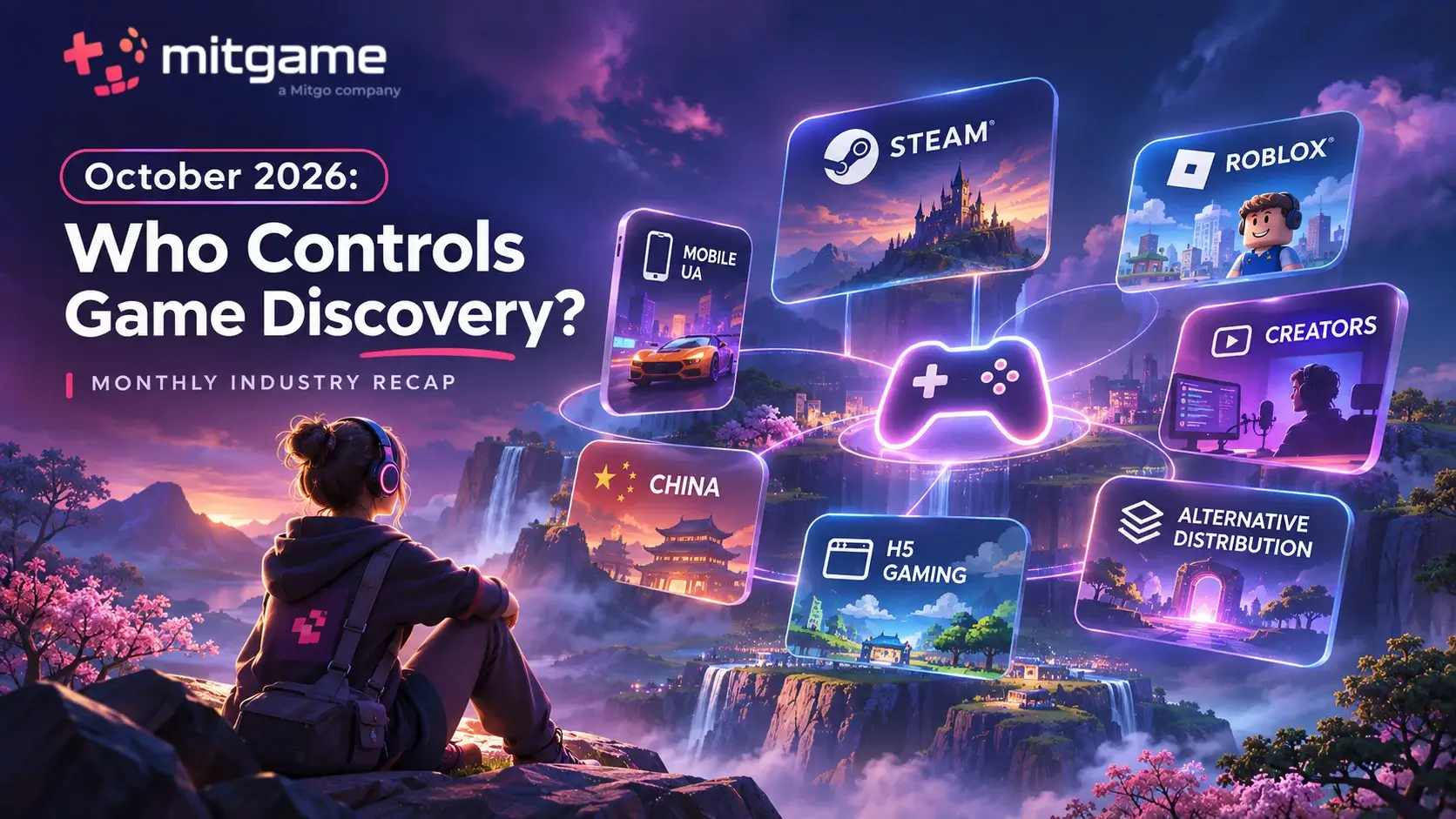
Table of content
October Game Discovery Trends at a Glance
1. H5 Gaming Is Starting to Look Less Like a Niche and More Like Another Distribution Layer
2. Mobile Game UA Got More Expensive Again. But the Platform Split Is the More Interesting Part
3. The Best Influencer for a Game Might Not Be a Gaming Influencer at All
4. China’s Game Discovery Stack Looks Very Different From the West
5. Steam Wishlists Now Convert to Sales Half as Well
6. 2% of Gaming Creatives Take 60% of the Budget
7. Roblox Has 6.7M Games. Half of Its Players Are Concentrated in Just 50
8. The Biggest Winners in Gaming Increasingly Own the Distribution Layer
Final Thoughts
📅 November 10, 2026 · ⏱️ 8 min read
The game discovery trends we followed in October 2026 point to a market with more platforms, more channels and more ways to reach players. But more distribution doesn’t necessarily mean more visibility.
Throughout the month, we explored how discovery is changing across mobile, PC and alternative ecosystems and who actually controls the path between a game and its players.
But more distribution doesn’t necessarily mean more visibility.
Throughout October 2026, we looked at how game discovery is changing across mobile, PC and alternative ecosystems. From H5 gaming and creator partnerships to Steam wishlists, China’s short-video platforms and Roblox, one question kept coming up: who actually controls the path between a game and its players?
We explored similar challenges in our previous article, September 2026: Game Discovery Is Getting Harder and More Fragmented.
Here’s our October gaming growth recap and what these changes mean for publishers, developers and UA teams.
October Game Discovery Trends at a Glance
This month, we explored 8 trends shaping gaming growth:
- 🌐 H5 gaming: Browser games are becoming another distribution layer.
- 📱 Mobile UA: Acquisition costs and monetization patterns are increasingly different across Android and iOS.
- 🎥 Creator marketing: The best audience fit doesn’t always come from gaming influencers.
- 🇨🇳 China: Short-video platforms are becoming central to game discovery.
- 🎮 Steam: Wishlists remain valuable, but their relationship with launch sales is changing.
- 🎨 Creative UA: A small percentage of video creatives now captures most gaming ad spend.
- 🕹️ Roblox: A massive ecosystem where player attention remains highly concentrated.
- 🔗 Platform economics: The companies controlling distribution are capturing a growing share of gaming revenue.
1. H5 Gaming Is Starting to Look Less Like a Niche and More Like Another Distribution Layer
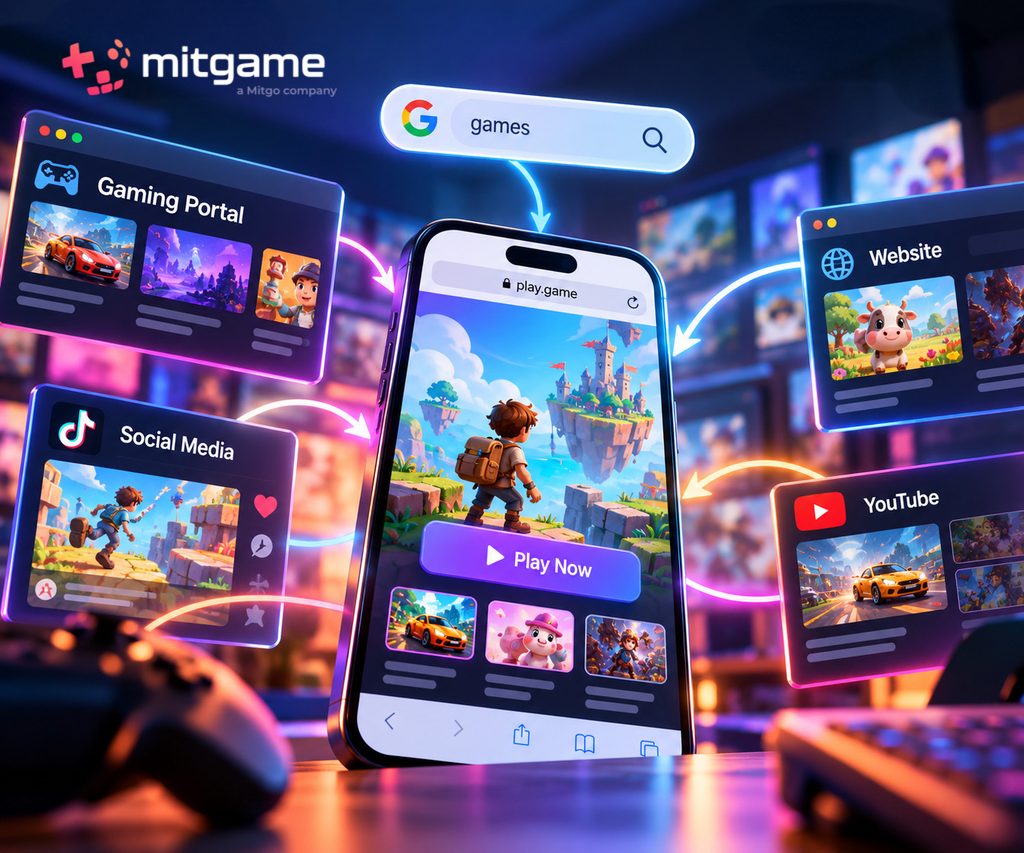
Browser gaming is becoming increasingly relevant to how players discover and engage with games.
According to research from Google × Newzoo, 46% of online consumers aged 13-55 across the surveyed regions play H5 games monthly.
And while H5 games run in browsers, their audience is largely mobile-first: 83% of H5 gamers play on smartphones.
The discovery journey is particularly interesting. Around 45% typically begin by searching the web, rather than going directly to a gaming portal.
That creates opportunities beyond traditional app stores, including gaming portals, social platforms and websites where people are already spending time.
💡 Mitgame takeaway
H5 gaming shows why alternative distribution deserves a place in modern acquisition strategies. Reaching players through browser-based environments can complement traditional UA and open additional discovery opportunities.
2. Mobile Game UA Got More Expensive Again. But the Platform Split Is the More Interesting Part
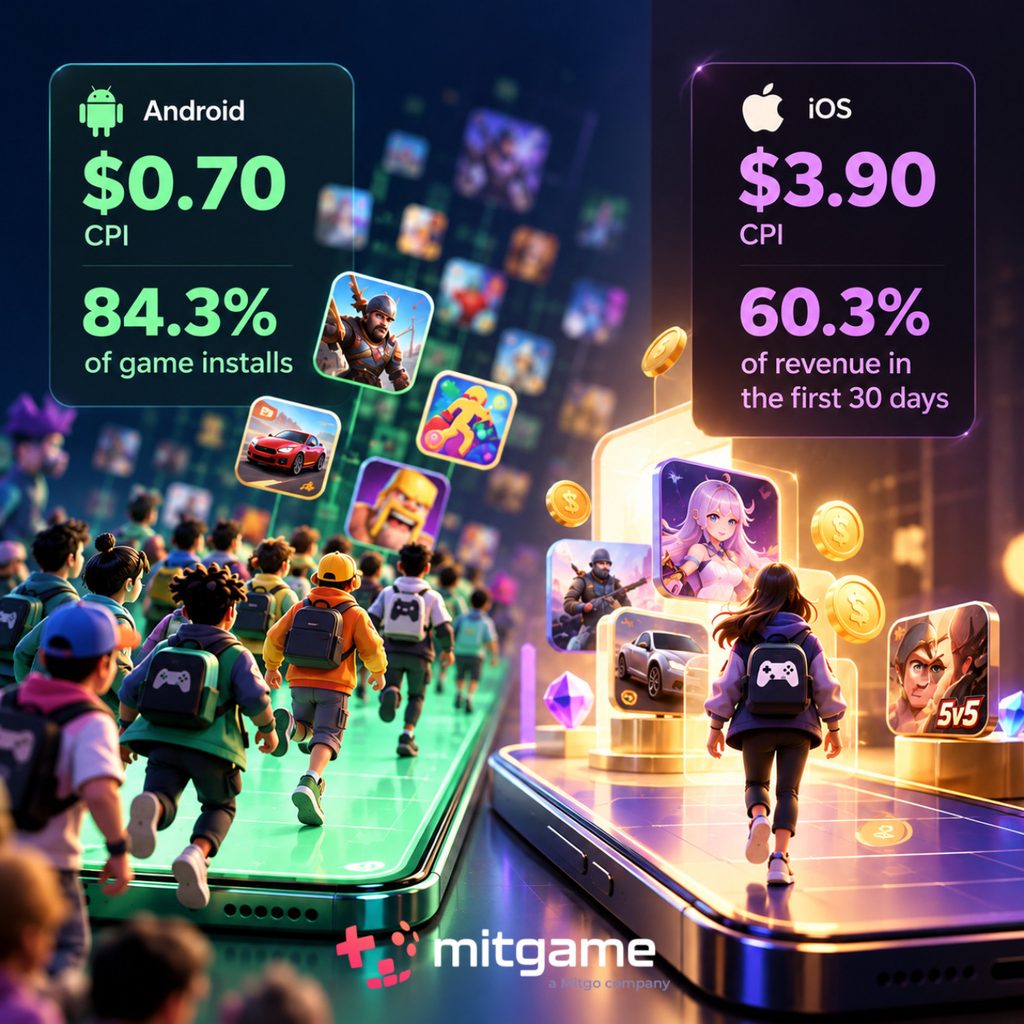
Mobile acquisition costs continued to rise in the latest quarterly data.
According to Singular’s Q2 2026 analysis, average gaming CPI reached $1.12, up 9.3% quarter over quarter.
But the Android and iOS split tells a more useful story.
In Singular’s gaming dataset, Android generated 84.3% of installs, while iOS contributed 60.3% of revenue during the first 30 days.
The difference highlights why install volume alone is not enough to evaluate acquisition performance.
Android can offer scale, while iOS may generate disproportionately higher early revenue. The right balance depends on the genre, audience, geography and monetization model.
💡 Mitgame takeaway
Mobile UA strategies need to look beyond average CPI. Platform-level economics, player quality and revenue contribution matter more than simply acquiring the largest number of installs.
3. The Best Influencer for a Game Might Not Be a Gaming Influencer at All
When studios plan creator campaigns, gaming influencers are usually the obvious starting point.
But the most relevant audience may exist outside gaming content altogether.
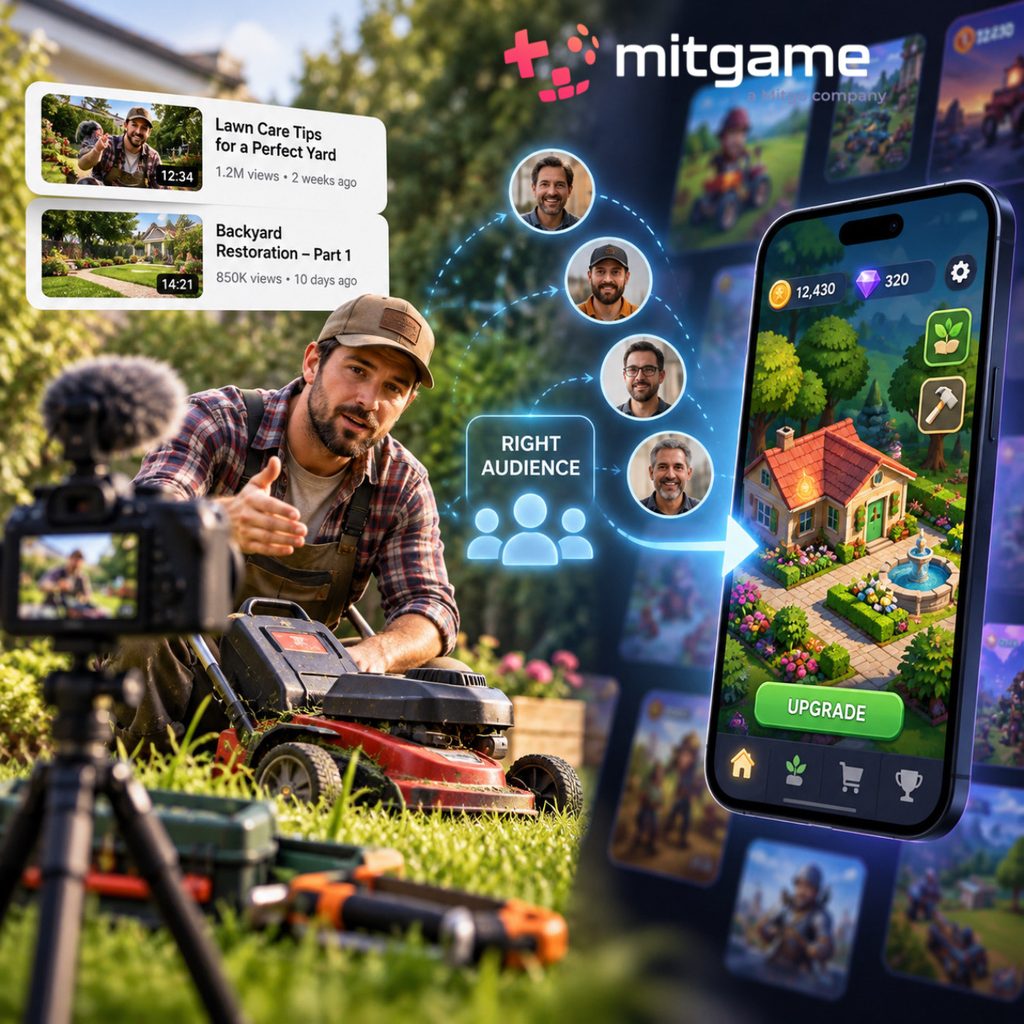
In a Mistplay interview, influencer marketing consultant Marion Balinoff shared an example of a strategy simulation game whose strongest creator partnerships came from lawn-mowing and garden-restoration channels.
The connection wasn’t the content category. It was the audience.
Those creators reached people whose demographics and interests aligned with the game’s target players, even though their channels weren’t focused on gaming.
For publishers, this challenges the assumption that creator selection should begin and end with gaming content.
💡 Mitgame takeaway
Effective creator UA starts with understanding the player, not just the creator’s niche. Looking beyond traditional gaming influencers can uncover relevant audiences and new opportunities for traffic diversification.
4. China’s Game Discovery Stack Looks Very Different From the West
Entering China requires more than adapting creatives and translating campaigns.
The platforms shaping player discovery are fundamentally different.
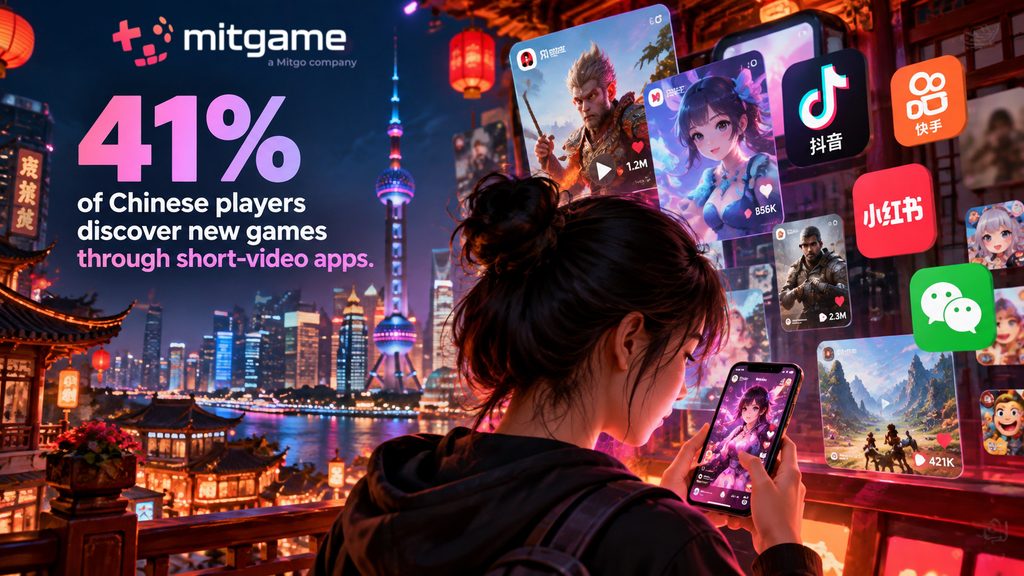
According to Niko Partners, 41% of Chinese players discover new games through short-video platforms such as Douyin and Kuaishou.
Short video is the leading discovery channel across PC, mobile and console audiences in the research.
Meanwhile, mini games have become a significant part of the ecosystem, accounting for nearly 20% of mobile game spending.
These findings highlight a discovery environment where short-form content, social engagement and embedded gaming experiences play a major role in how players encounter new titles.
💡 Mitgame takeaway
Market entry strategies need to follow local player behavior. The distribution channels that work in Western markets cannot simply be replicated in China without adapting to its discovery ecosystem.
5. Steam Wishlists Now Convert to Sales Half as Well
Steam wishlists remain one of the industry’s most widely used indicators of pre-launch demand.
But recent data suggests that the relationship between wishlists and launch sales is changing.
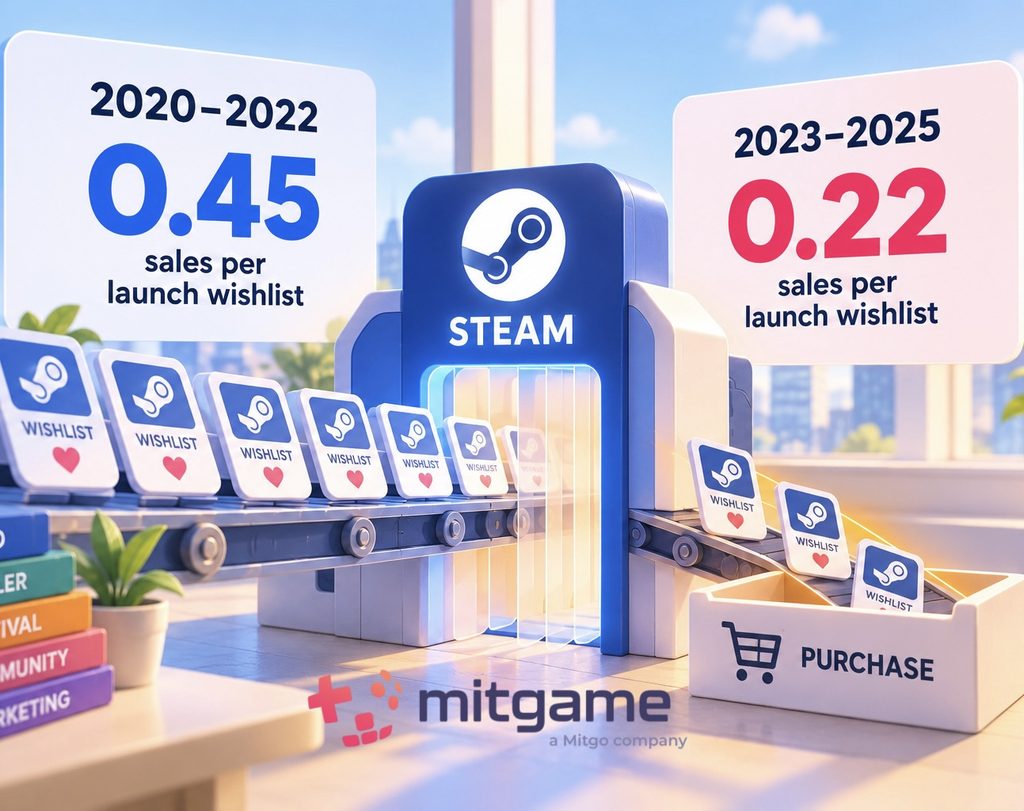
In an analysis of 160 Steam games, Chris Zukowski found that titles released between 2020 and 2022 generated a median of 0.45 first-month sales per launch wishlist.
For games released between 2023 and 2025, that figure fell to 0.22.
However, the study also found that wishlist totals remained strongly correlated with launch sales.
So the message isn’t that wishlists no longer matter. It’s that the same wishlist total may now correspond to a different level of commercial demand.
💡 Mitgame takeaway
Publishers should continue investing in pre-launch discovery while paying closer attention to the quality of audience interest. Wishlists remain important, but should be interpreted alongside demo engagement, creator activity and other signals of purchase intent.
6. 2% of Gaming Creatives Take 60% of the Budget
Producing more advertising creatives doesn’t necessarily mean that more creatives will receive meaningful spend.
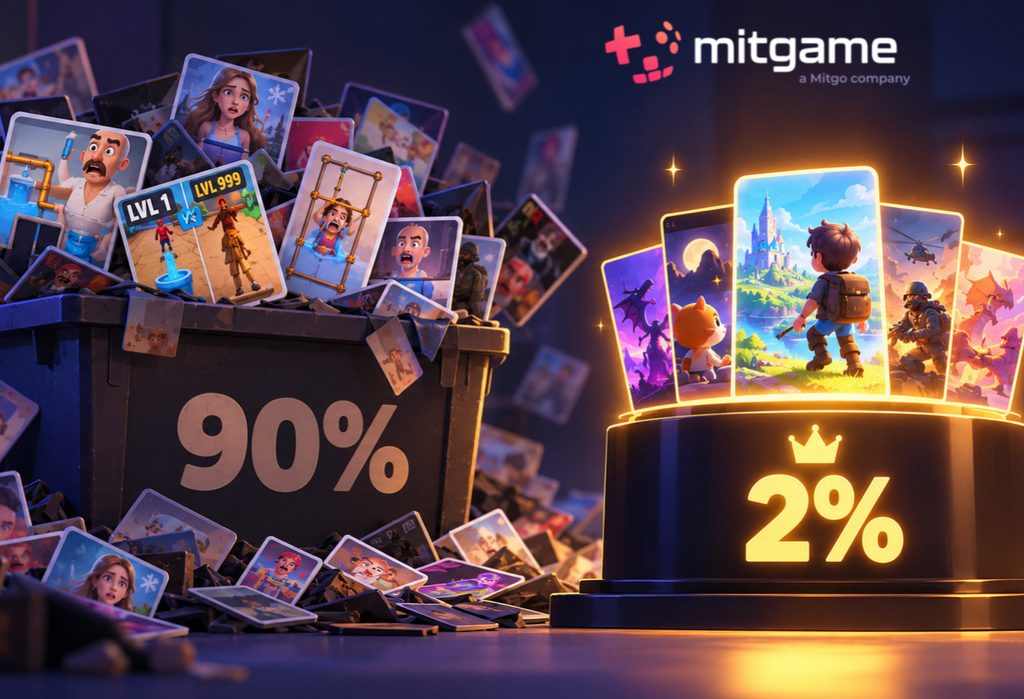
According to AppsFlyer’s State of Creative Optimization 2026, the top 2% of gaming video creatives captured 60.7% of video advertising spend in Q2 2026.
The concentration is striking, especially as studios continue expanding creative production and testing.
But creative volume and budget allocation aren’t the same as performance. The figures describe where spend is concentrated, rather than directly measuring retention or revenue generated by each creative.
For UA teams, the challenge is finding concepts that resonate with players, testing them effectively and understanding when a winning approach stops delivering results.
💡 Mitgame takeaway
Creative diversification needs to be supported by smarter testing and measurement. The goal isn’t just producing more variations, it’s identifying which messages, formats and audiences can create meaningful acquisition results.
7. Roblox Has 6.7M Games. Half of Its Players Are Concentrated in Just 50
Roblox offers a clear example of how a massive content ecosystem can still have highly concentrated player attention.
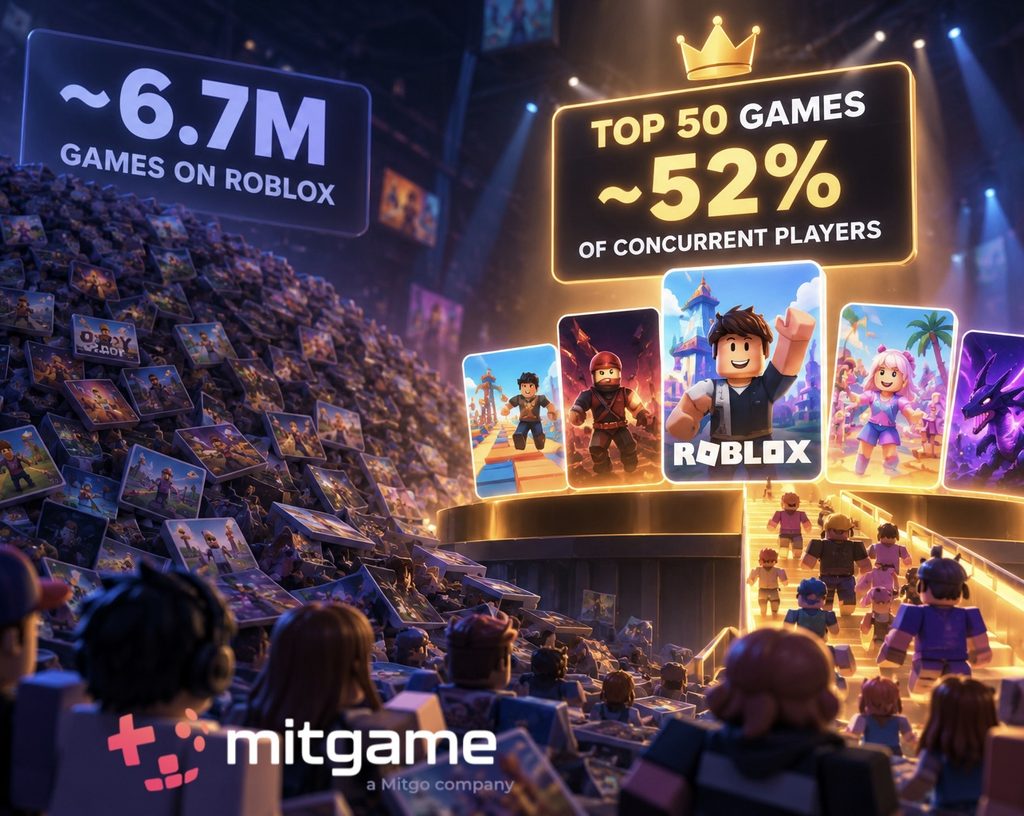
According to research from Newzoo × GEEIQ, Roblox hosts approximately 6.7 million experiences, yet around half of its concurrent players are concentrated in just 50 of them.
The platform provides enormous potential reach, but simply making a game available doesn’t guarantee discoverability.
The research also highlights the importance of external discovery. Roblox players are especially engaged with YouTube, creators and community platforms such as Discord.
For brands and publishers, one opportunity is to reach players through existing popular experiences rather than building entirely new branded worlds.
Among October’s game discovery trends, Roblox offers one of the clearest examples of how platform scale and actual player visibility can tell very different stories.
💡 Mitgame takeaway
Platform reach and actual discoverability are different things. Publishers need strategies that connect relevant communities, creators and established experiences with measurable player acquisition.
8. The Biggest Winners in Gaming Increasingly Own the Distribution Layer
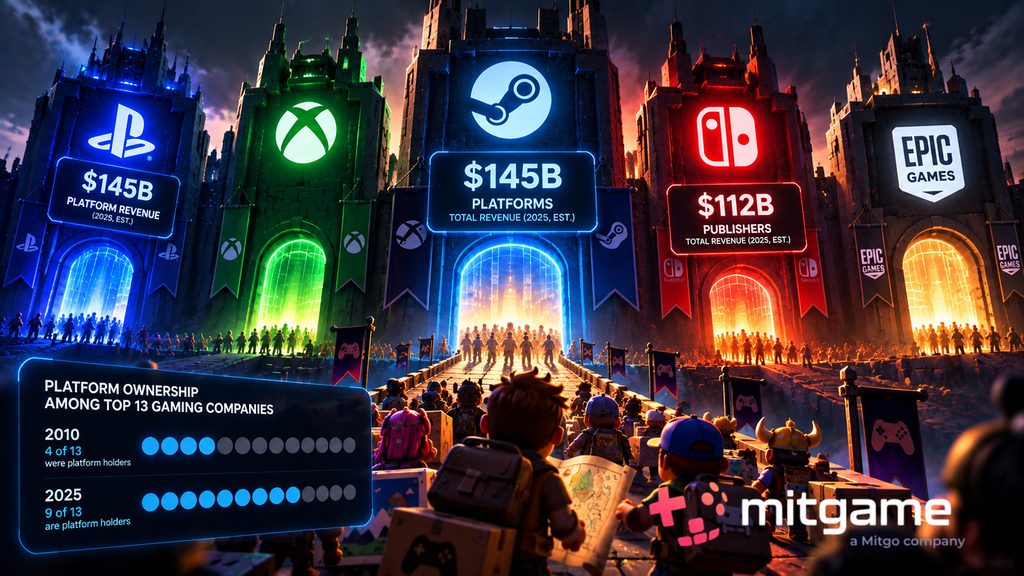
One of October’s most important industry discussions was about who captures value from gaming growth.
In his analysis The Landlord’s Game, Joost van Dreunen highlighted how platform ownership has become increasingly concentrated among the industry’s largest companies.
In 2010, four of the 13 largest gaming companies were platform holders. By 2025, that number had grown to nine.
This matters because platforms influence much more than where a game can be purchased.
They shape discoverability, monetization, payments, audience access and the commercial relationship between developers and players.
As a result, publishers have growing reasons to explore D2C, creator-led acquisition, community distribution and other channels that complement their existing platform presence.
💡 Mitgame takeaway
Distribution diversification is becoming a strategic growth priority. Building additional measurable routes to players can help publishers reduce reliance on any single discovery or acquisition environment.
Final Thoughts
October’s game discovery trends point toward a market where distribution opportunities are expanding, but player attention remains increasingly difficult to win.
Steam wishlists are becoming less directly comparable with historical sales benchmarks. Mobile UA requires a closer look at platform economics. Creators and communities are opening alternative acquisition paths, while platforms such as Roblox demonstrate how concentrated discovery can become.
And across the industry, the companies controlling distribution are playing an increasingly important role in shaping how games reach audiences.
For publishers, the opportunity isn’t necessarily to be present on every new platform.
It’s to understand where their players are, which channels can create additional demand, and how to measure the commercial value of that attention.
At Mitgame, that’s where we see the next opportunities for gaming growth: connecting traditional acquisition with creators, communities, alternative distribution and performance partnerships that help games reach audiences beyond their existing channels.
Because the future of game discovery isn’t about finding one perfect platform.
It’s about building more effective routes between games and the people who want to play them.


Table of content
October Game Discovery Trends at a Glance
1. H5 Gaming Is Starting to Look Less Like a Niche and More Like Another Distribution Layer
2. Mobile Game UA Got More Expensive Again. But the Platform Split Is the More Interesting Part
3. The Best Influencer for a Game Might Not Be a Gaming Influencer at All
4. China’s Game Discovery Stack Looks Very Different From the West
5. Steam Wishlists Now Convert to Sales Half as Well
6. 2% of Gaming Creatives Take 60% of the Budget
7. Roblox Has 6.7M Games. Half of Its Players Are Concentrated in Just 50
8. The Biggest Winners in Gaming Increasingly Own the Distribution Layer
Final Thoughts


